
10 Ideas for a Tuscan Style Home Inspired by Italian Interior Design
INTERIOR DESIGN
Allison W.
10/23/2025
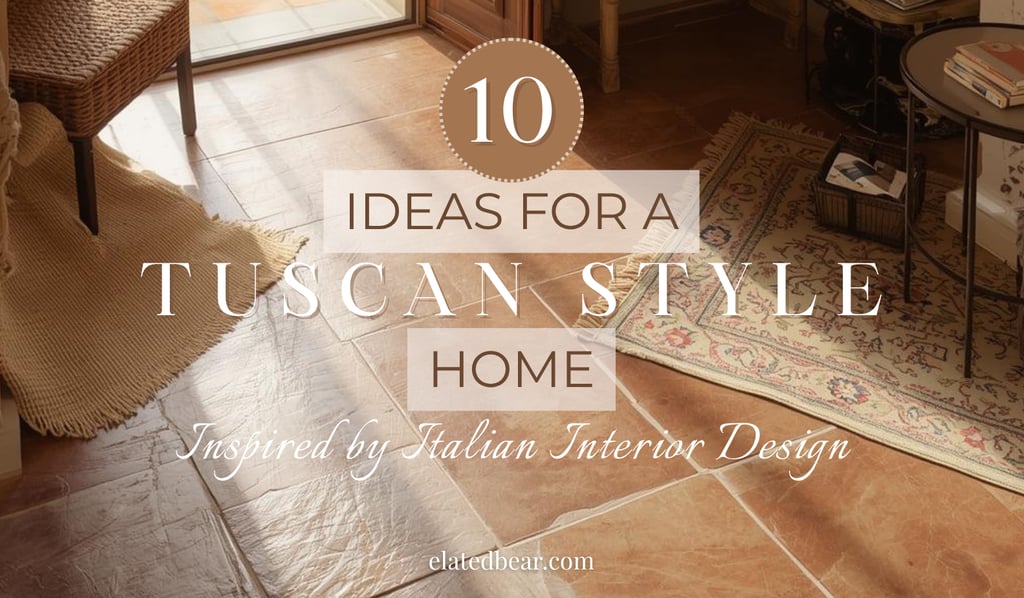
You know those moments when you're scrolling through photos of Italian villas—the sun-drenched courtyards, the terracotta roofs, the rustic wood tables set for long leisurely meals—and you think, "I want my home to feel like that"? I've been there! There's something about Tuscan design that just speaks to the soul. It's warm, inviting, and effortlessly elegant without being stuffy or formal.
Here's what I love most about Italian interior design: it's not about perfection. It's about celebrating natural materials, embracing patina and age, and creating spaces that feel lived-in and loved. Those slightly imperfect plaster walls? Beautiful. That chunky farmhouse table with years of character? Gorgeous. It's the opposite of sterile showroom design, and that's exactly why it feels so welcoming.
The good news? You don't need a centuries-old villa in the Tuscan countryside to capture this aesthetic. Modern Tuscan design takes those timeless Italian elements—warm earthy colors, natural materials, rustic textures—and adapts them for today's homes in a way that feels both authentic and livable.
I've pulled together 10 ideas that'll help you bring that Italian warmth and Old World charm into your space, whether you're starting from scratch or just want to add some Tuscan-inspired touches. Ready to bring a little bit of Italy home? Andiamo!
1. Warm, Earthy Color Palette
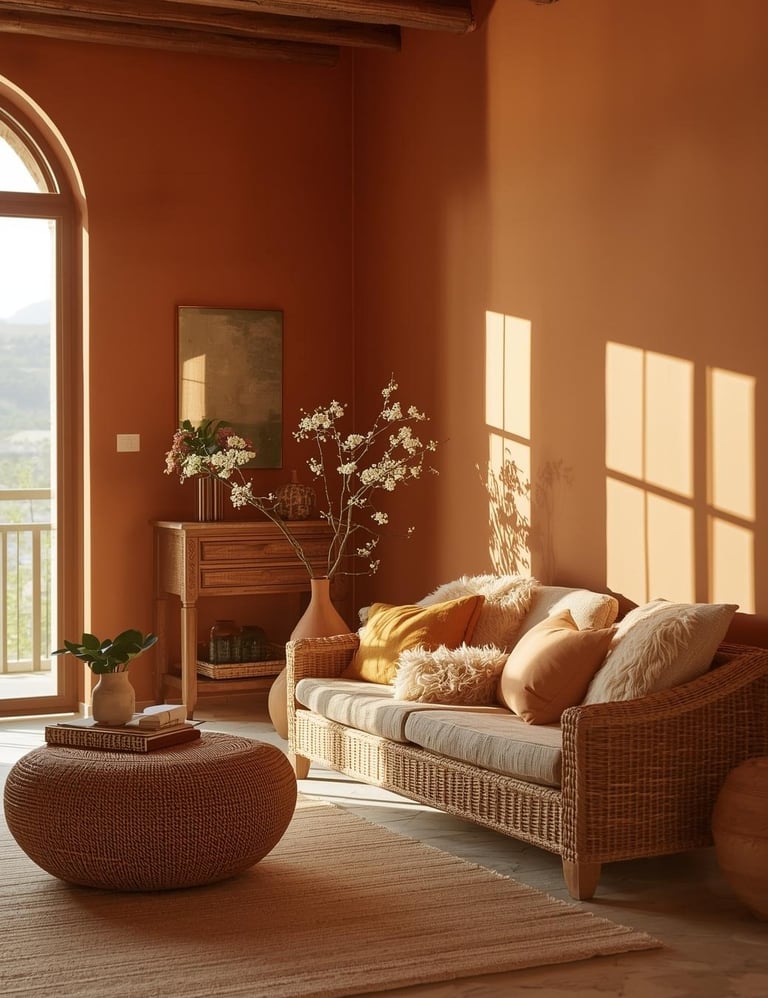
Let's start with the foundation of any Tuscan-inspired home—color! Think about the Italian countryside: rolling hills in golden ochre, terracotta rooftops baking in the sun, olive groves in soft sage green, and those gorgeous burnt sienna sunsets. These warm, earthy tones are what instantly transport you to Tuscany, and they're the perfect starting point for creating that Italian atmosphere in your own home.
I painted an accent wall in my dining room a warm terracotta shade, and it completely transformed the space. Suddenly it felt cozier, more intimate, and yes—a little bit like I was dining in an Italian villa! The warmth of these colors creates an immediate sense of welcome that cooler tones just can't match.
Traditional Tuscan colors can be quite bold and saturated, but the modern approach is using softer, more muted versions. Think creamy golden yellow instead of bright sunshine yellow. Warm rust instead of bright orange-red. Soft sage rather than bright olive. These toned-down versions feel more contemporary while still capturing that authentic Italian warmth.
Where to use these colors? Try a warm ochre or terracotta on your walls for instant Tuscan vibes. Use olive green or warm cream as accent colors in textiles and decor. Add burnt sienna through artwork, pottery, or throw pillows. Layer different earthy tones together—just like in the Italian landscape, they all work beautifully side by side!
2. Exposed Wood Beams
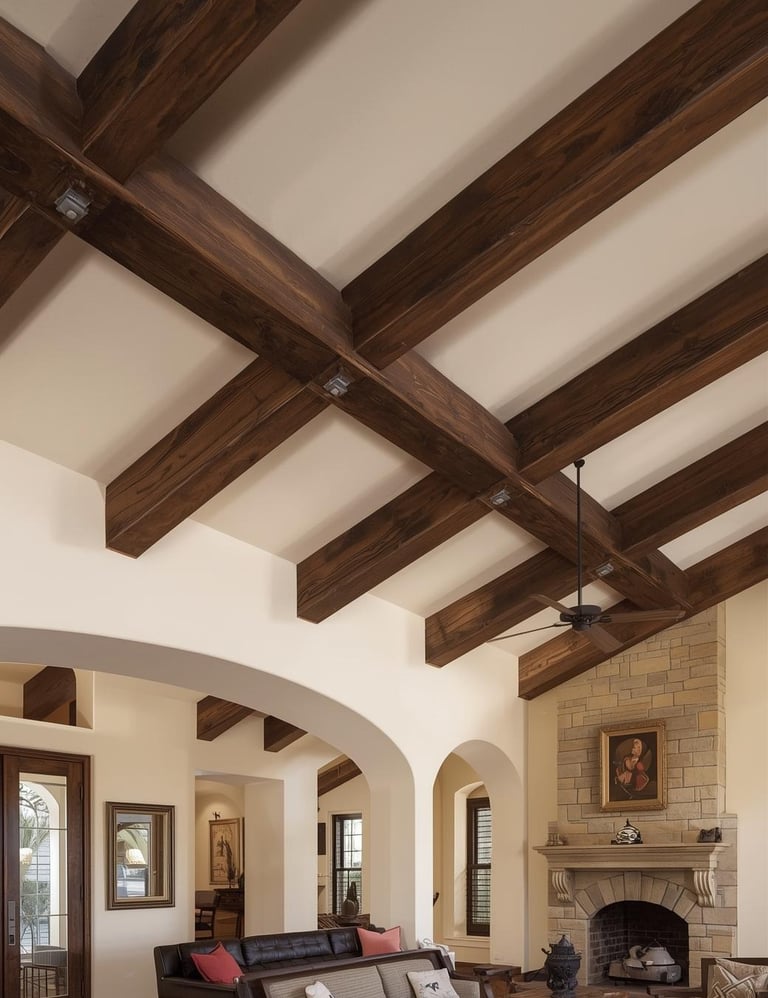
Nothing says "Italian villa" quite like exposed wood beams stretching across the ceiling! These rustic architectural elements add instant Old World character and make any room feel more substantial and authentic. I'm absolutely obsessed with the warmth and visual interest they bring—they literally draw your eye up and make spaces feel more grand and collected.
Exposed beams are a traditional feature found in centuries-old Italian farmhouses and villas, where massive wooden beams were both structural and beautiful. Today, we can capture that same aesthetic whether your beams are actually holding up your ceiling or purely decorative (and honestly, no one needs to know which!).
The most classic Tuscan look is dark-stained beams against white or cream ceilings. That contrast is stunning and creates drama without being overwhelming. The dark wood adds depth and grounds the space, while the light ceiling keeps everything feeling airy. It's the perfect balance of rustic and refined.
Where to add beams? Living rooms with vaulted or high ceilings are obvious choices—the beams add coziness to large spaces. Kitchens look amazing with beams, especially over islands or dining areas. Even bedrooms benefit from that cozy, Old World charm overhead.
If adding real reclaimed wood beams feels too involved or expensive, faux beams are a fantastic alternative! They're lightweight, easier to install, and look incredibly realistic. You get that authentic Tuscan look without the structural work or hefty price tag. Either way, exposed beams transform ordinary ceilings into architectural focal points that scream Italian countryside!
3. Terracotta and Stone Flooring
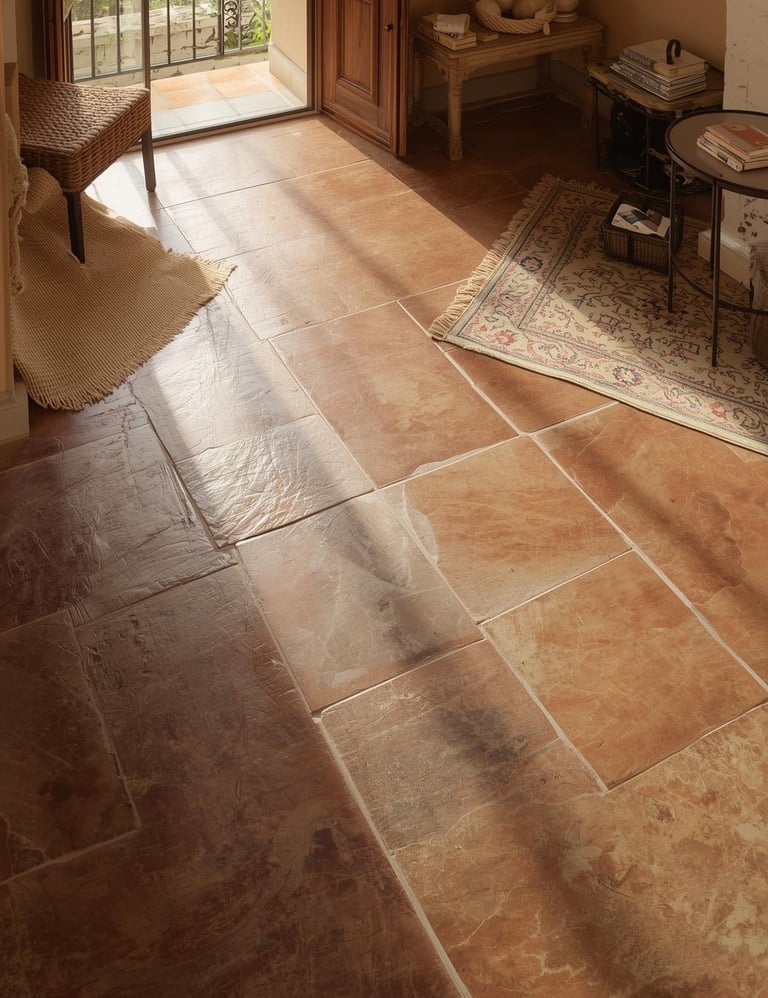
Let's talk about what's underfoot in Italian homes—natural materials like terracotta tiles and stone that have been used for centuries because they're beautiful, practical, and full of character. There's something so authentically Tuscan about walking on cool terra cotta or travertine floors, especially in a warm climate. It just feels right!
Traditional terracotta tiles are that gorgeous sun-baked clay color—warm orangey-brown with natural variations and imperfections that make each tile unique. In old Italian villas, these floors develop the most beautiful patina over time, with slight wear patterns and color variations that add character. That's the kind of aging that makes things more beautiful, not less!
For a modern Tuscan home, you have options beyond traditional small terracotta tiles. Large-format tiles in terracotta tones create a more contemporary look while keeping that warm Italian feeling. Travertine or limestone in warm beiges and tans brings that stone element without being too rustic. Even porcelain tiles that mimic the look of terracotta offer durability and easier maintenance—perfect for busy families!
One of my favorite things about these natural stone floors is how they stay cool in summer (a blessing in hot climates!) while still feeling warm in color. And if you're worried about them being too hard or cold underfoot, that's where layering comes in. Add beautiful area rugs—maybe a vintage Persian or a textured jute rug—for softness and warmth where you need it. The combination of natural flooring with soft textiles is quintessentially Italian!
4. Textured Plaster Walls
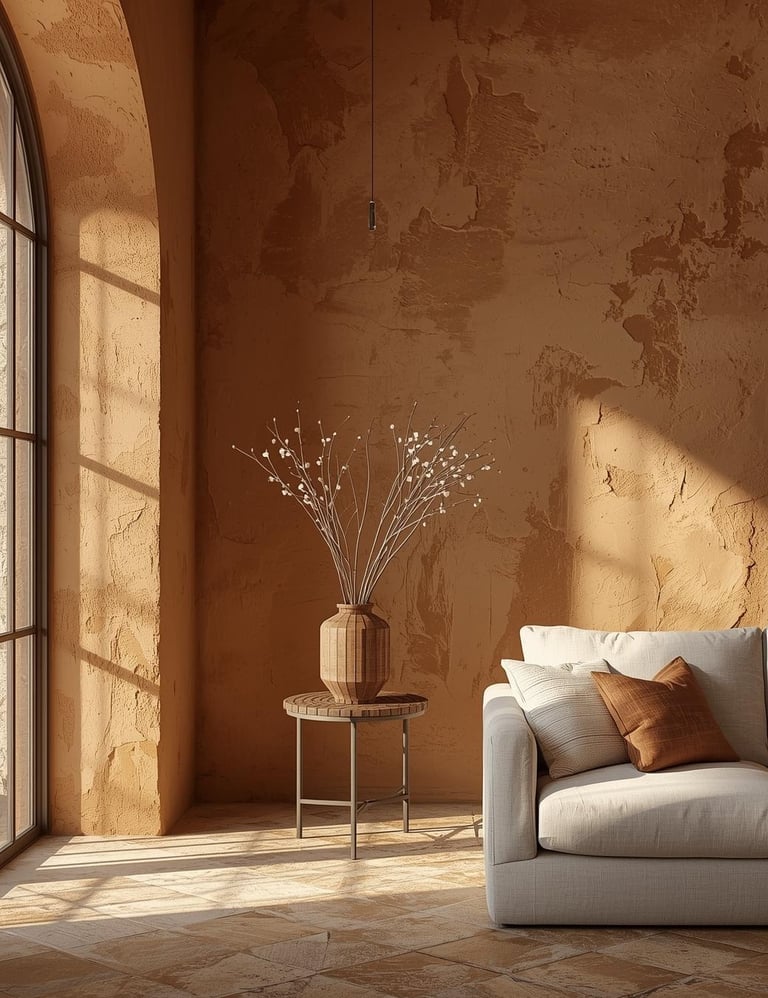
If there's one element that instantly transports you to an Italian villa, it's those gorgeously imperfect textured plaster walls. I'm talking about Venetian plaster, limewash, or hand-troweled finishes that have depth, subtle variations, and that lived-in character that you just can't get with flat paint. These walls have soul!
What makes textured plaster so special is the way light plays across the surface throughout the day. Unlike flat paint that looks the same all the time, plaster walls shift and change as sunlight moves through your space. You get these beautiful shadows and highlights that create depth and dimension. It's like having living, breathing walls—very Italian!
Traditional Italian plaster techniques involve multiple layers applied and hand-troweled to create subtle texture and color variations. No two sections look exactly the same, and that's the beauty of it! Modern applications have made this easier—you can achieve similar looks with specialty paints and techniques that mimic the traditional plaster effect.
For a modern Tuscan approach, you don't need to plaster every wall in your entire house (that would be expensive and maybe overwhelming!). Instead, try it as an accent wall—maybe behind your bed, in your dining room, or on one kitchen wall. Even one textured plaster wall adds instant Old World charm and becomes a focal point that draws the eye.
Colors for Italian plaster walls? Think warm ochre, creamy beige, soft terracotta, or even white with subtle texture. The finish can be matte and rustic or slightly polished for a more refined Venetian plaster look. Either way, you're creating walls with character and authenticity that flat paint just can't match!
5. Wrought Iron Accents
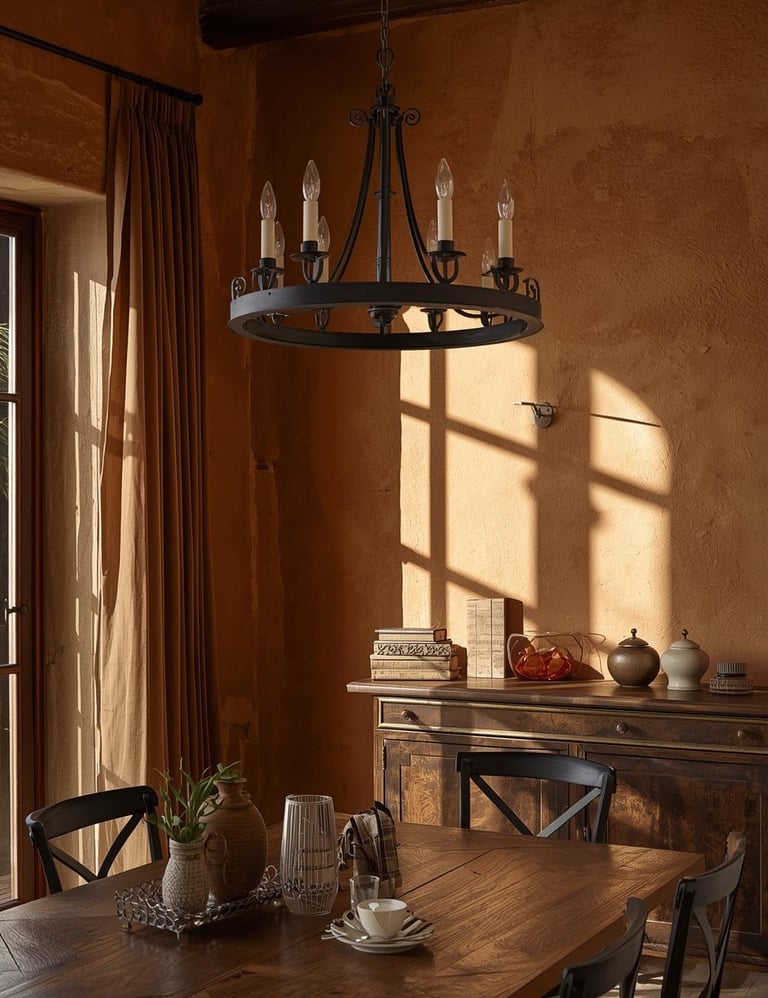
Wrought iron is one of those signature elements that screams Italian craftsmanship and Old World elegance. There's something about hand-forged metal details—the weight, the dark patina, the slightly irregular handmade quality—that adds instant authenticity to Tuscan-inspired spaces. These aren't mass-produced pieces; they feel artisan-made and collected over time.
In traditional Italian homes, wrought iron appears everywhere: stair railings with scrollwork, chandeliers and sconces, window grilles, curtain rods, even door hardware. The dark, aged iron provides beautiful contrast against warm plaster walls and creates visual interest without being overly decorative. It's functional art!
For a modern Tuscan home, the key is using wrought iron strategically rather than going overboard. You want to suggest Old World charm, not turn your home into a medieval castle! Maybe it's a stunning iron chandelier over your dining table as a focal point. Or simple iron curtain rods that add substance without fuss. Iron cabinet hardware in your kitchen. A decorative iron wall piece or mirror frame.
Modern interpretations lean toward simpler designs rather than elaborate scrollwork. Think clean lines with just a hint of decorative detail. Matte black finishes work beautifully and feel more contemporary while still capturing that iron aesthetic. The goal is adding those metal accents that ground your space and provide contrast against softer elements.
I love how wrought iron pairs with other Tuscan materials—it looks stunning against textured plaster walls, complements rustic wood beautifully, and provides that necessary visual weight that balances all the warm, soft textures in Italian design!
6. Rustic Wood Furniture
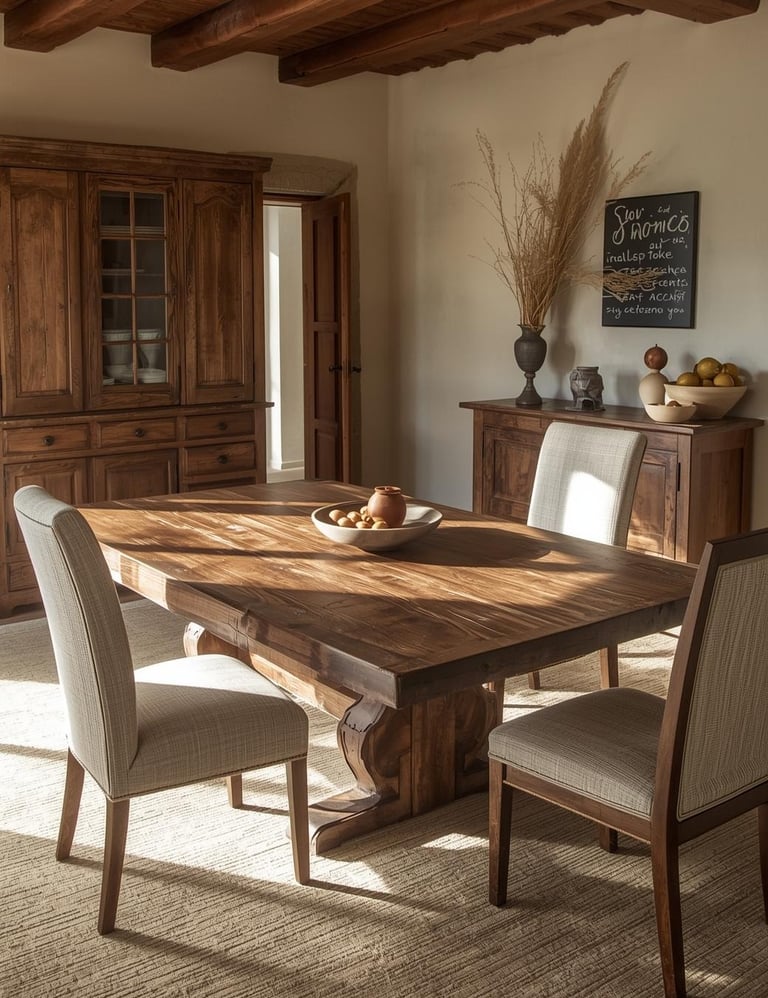
Italian furniture has this wonderful substantial, lived-in quality that makes it feel like it's been in the family for generations. We're talking about chunky farmhouse tables, heavy sideboards, solid wood beds—pieces with real presence and character that anchor your space and tell a story. This isn't delicate, precious furniture; it's made for gathering, for meals that last hours, for living!
The look of Tuscan wood furniture is all about natural beauty and age. Think thick planks of walnut, oak, or chestnut with visible grain patterns. Distressed finishes that show wear in all the right places—those aren't flaws, they're character marks! Warm honey tones, rich browns, and natural wood colors that bring organic warmth to every room.
What I love most about rustic Italian furniture is how it embraces imperfection. That farmhouse dining table with the slightly uneven surface? Perfect. The sideboard with dings and scratches from decades of use? Beautiful. In Italian design, furniture doesn't need to be pristine—it needs to be real, functional, and full of life.
Here's something that makes Tuscan style so achievable: you can absolutely mix different wood tones! Italian homes aren't matchy-matchy. Your dining table might be dark walnut, your sideboard medium oak, and your shelving lighter pine—and it all works together because they're all natural woods with warmth.
To keep it modern, balance those heavy rustic wood pieces with lighter elements. Pair that chunky farmhouse table with clean-lined upholstered chairs. Let your massive wood sideboard sit against light-colored walls. The contrast between rustic wood and contemporary elements creates that perfect modern Tuscan vibe!
7. Natural Linen and Cotton Textiles
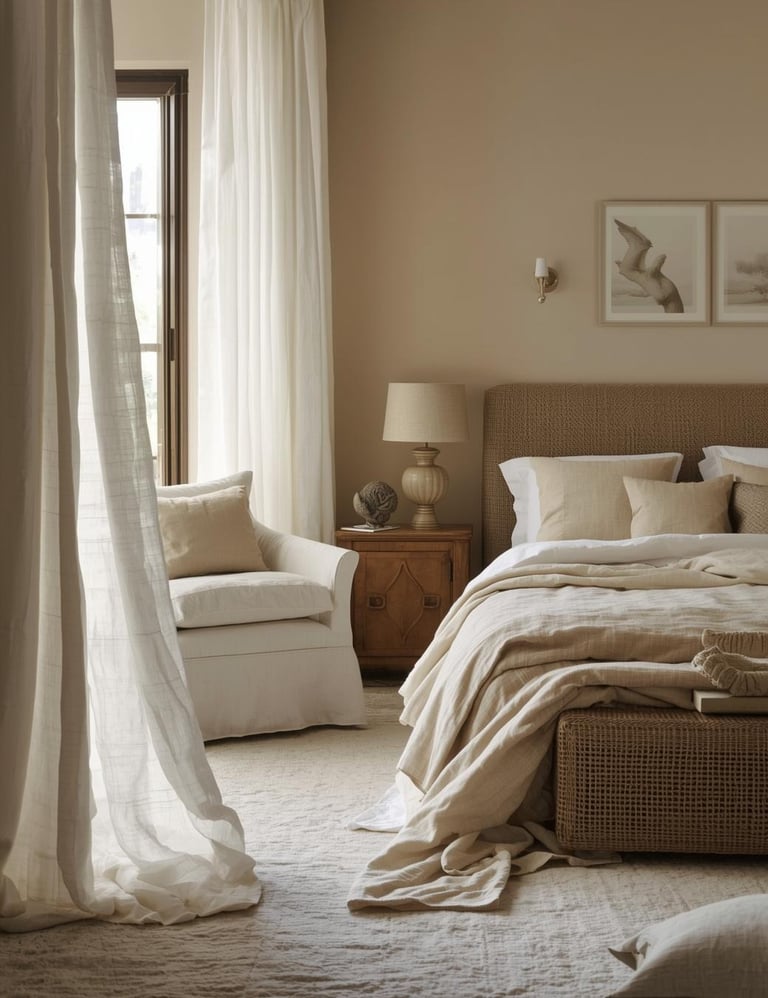
Italian homes have this effortless elegance when it comes to textiles—everything is natural, soft, and beautifully simple. We're talking about linen curtains that puddle on the floor, cotton slipcovers that look casually rumpled, bedding in creamy neutrals that invites you to sink in and stay awhile. It's quality over flash, and it's absolutely gorgeous.
What makes Italian textiles so special is that focus on natural materials. Linen and cotton are breathable, they age beautifully, they have this wonderful texture and drape that synthetic fabrics can't match. In the Italian sensibility, these aren't just practical choices—they're about surrounding yourself with materials that feel good and look better the more you use them.
The color palette for Tuscan textiles is all about those soft, natural tones. Think undyed linen in its natural creamy beige, warm whites that aren't stark or cold, soft taupes, gentle ivory. These aren't trying to make a statement; they're creating a calm, cohesive backdrop that lets other elements shine.
Here's what I love: Italian linen isn't meant to be perfectly pressed and crisp. That slightly rumpled, lived-in look is actually part of the aesthetic! Those natural wrinkles in your linen curtains? Charming. Your cotton slipcovers looking a bit relaxed? Perfect. It's the opposite of uptight, formal decorating—it's about comfort and ease.
Where to use these textiles? Flowing linen curtains that soften windows and filter that beautiful Italian light. Cotton or linen slipcovers on sofas and chairs for that relaxed elegance. All your bedding in soft natural linens. Throw pillows and table linens in these same gentle tones. The natural fabrics create this cohesive, serene atmosphere throughout your home!
8. Arched Doorways and Windows
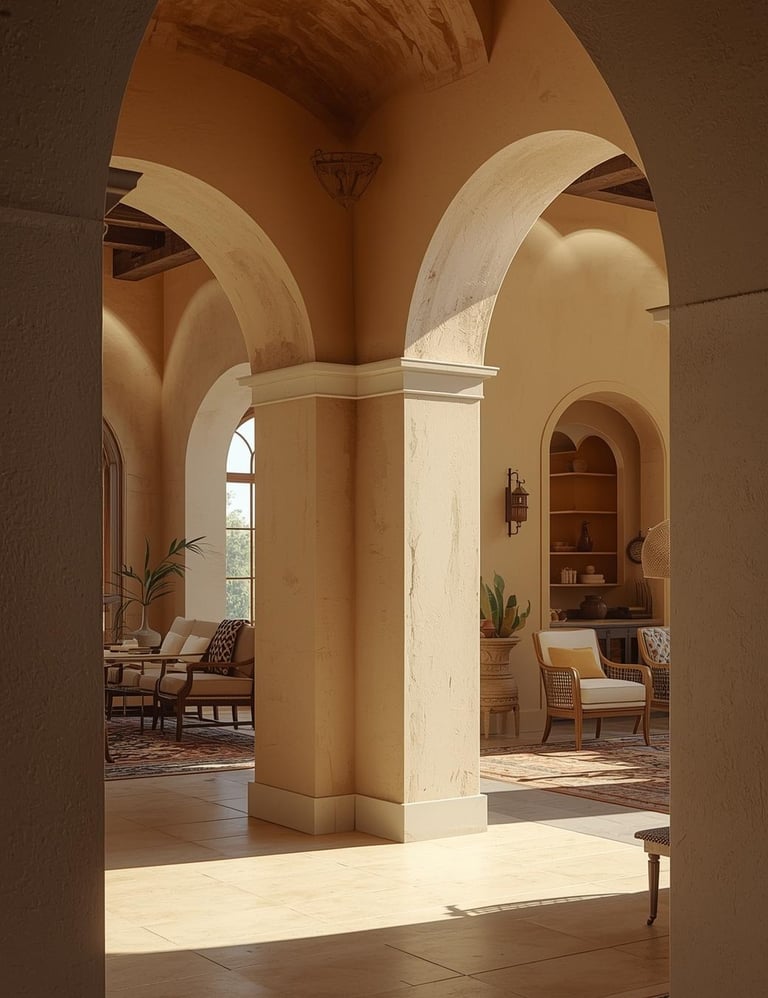
Arched doorways and windows are quintessentially Italian—those graceful curves immediately evoke images of Tuscan villas and Old World architecture. There's something so elegant and timeless about an arch; it softens spaces, adds architectural interest, and creates that unmistakable Italian character that flat, rectangular openings just can't match.
In traditional Italian homes, you'll find arches everywhere—doorways between rooms, window openings, hallway passages, even niches in walls for displaying pottery or artwork. These weren't just decorative choices; rounded arches are actually stronger structurally than rectangular openings, which is why they've been used in architecture for thousands of years. Beauty and function together—very Italian!
Now, I know what you're thinking: "I can't just start knocking out walls and creating arches!" And you're absolutely right—adding actual arched openings is a significant renovation. But here's the thing: you can suggest the look and capture that Italian feeling in other ways without major construction.
If you're building new or doing a major remodel, absolutely consider adding arched doorways or windows—they're a stunning architectural feature that adds instant Old World charm. But if that's not in the cards, you can bring arched elements into your home through arched mirrors (these make a huge statement!), arched artwork or wall decor, arched cabinet doors in your kitchen, or even creating an arched niche in a wall for displaying objects.
Even one significant arched element—like a large arched mirror in your entryway or an arched window treatment—can evoke that Italian villa feeling without renovating your entire home. It's about suggesting the aesthetic and letting that one beautiful curve remind you of Italian architecture every time you see it!
9. Tuscan Kitchen Elements
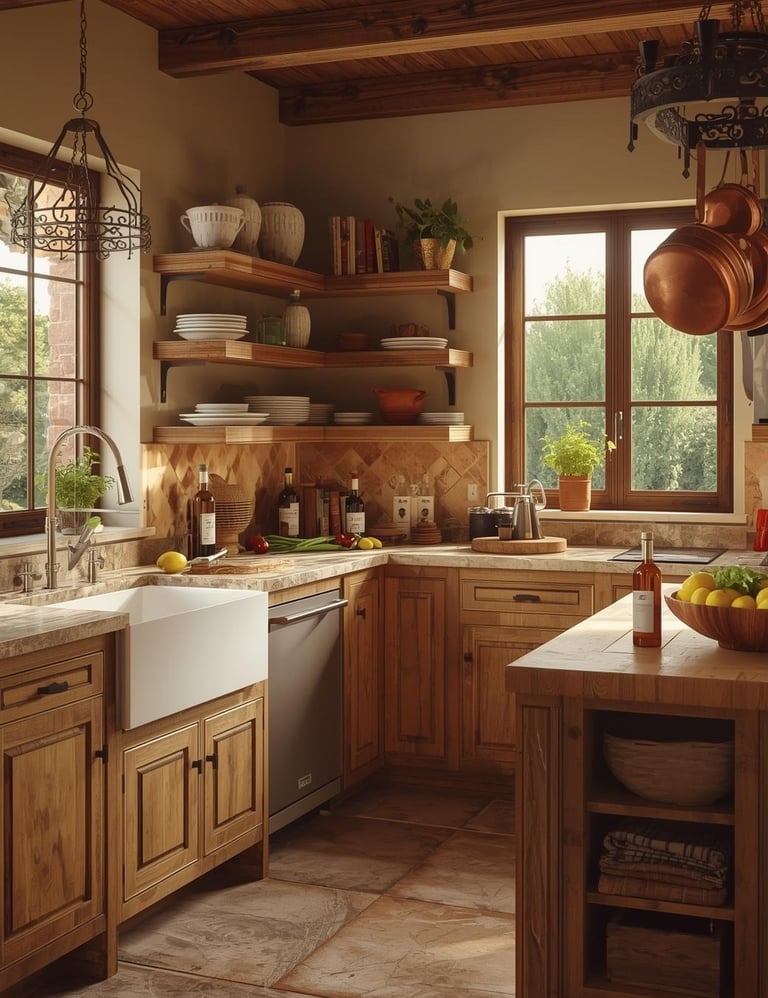
The kitchen is truly the heart of an Italian home—it's where families gather, where long meals are prepared with love, and where life happens. A Tuscan-inspired kitchen deserves special attention because it captures that perfect blend of rustic charm, functionality, and warmth that defines Italian living. Let's talk about creating that authentic Italian kitchen feeling!
First, let's address storage and display. Open shelving is huge in Tuscan kitchens—think rustic wooden shelves displaying beautiful dishes, olive oil bottles, and everyday items that are pretty enough to show off. Pot racks hanging from the ceiling (especially wrought iron ones!) keep your cookware accessible while adding that professional, lived-in chef's kitchen vibe. A deep farmhouse sink is practically required—it's both gorgeous and incredibly practical for washing big pots and piles of fresh vegetables.
Materials are key to nailing the Tuscan kitchen aesthetic. Stone countertops (marble, limestone, or even soapstone) bring that natural element and Old World feel. A terracotta tile backsplash in warm clay tones connects to traditional Italian materials. Rustic wood cabinets—maybe with a distressed finish or even left natural—add warmth and character. Butcher block countertops or islands bring in that functional workspace element that's so Italian.
The beauty of a Tuscan kitchen is how it celebrates cooking and gathering. Display your beautiful dishes, your collection of olive oils, fresh herbs growing in terracotta pots on the windowsill, a bowl of lemons on the counter. These aren't just decorative—they're the ingredients and tools of Italian cooking, and they deserve to be visible and celebrated!
For a modern take, you can absolutely have updated appliances within this rustic aesthetic. Stainless steel or even panel-ready appliances that blend with cabinetry work beautifully. The key is balancing modern function with Old World charm—you want a kitchen that looks Italian but works for how you actually cook and live!
10. Olive Branches, Herbs, and Natural Elements
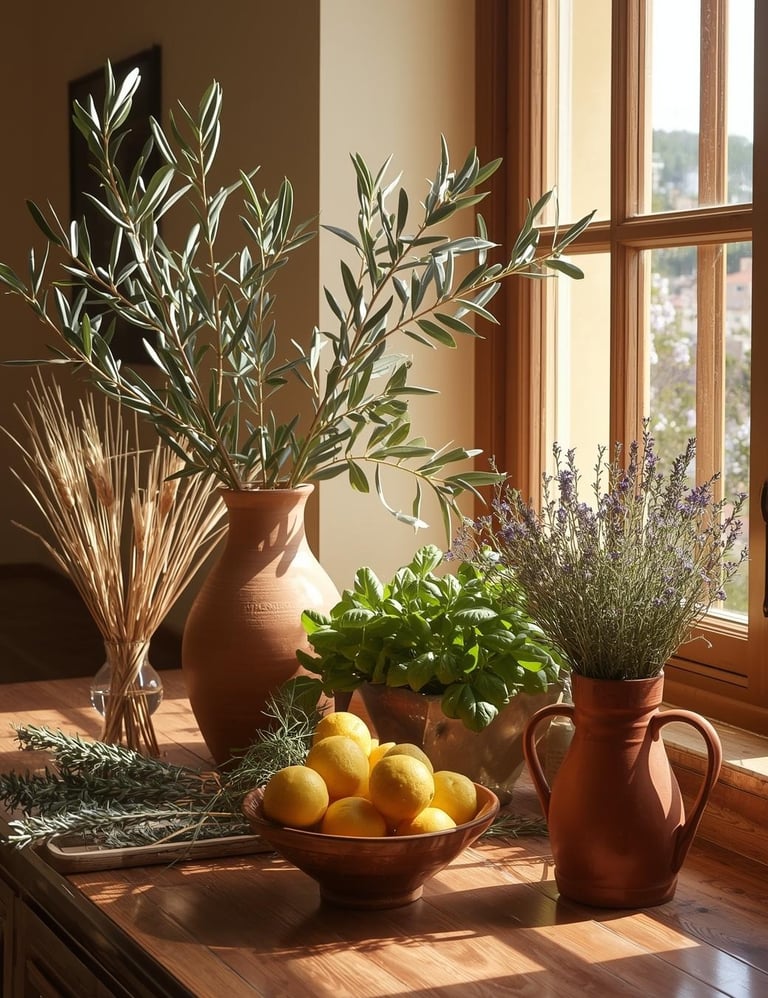
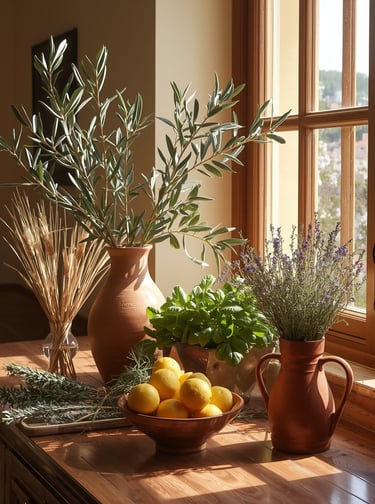
Let's finish with one of my favorite aspects of Italian design—bringing the Tuscan countryside inside through natural, living elements! Italian homes celebrate their connection to the land, and incorporating olive branches, fresh herbs, and other natural touches is such an easy, beautiful way to capture that Mediterranean spirit in your own space.
Olive branches are iconic in Italian design—those silvery-green leaves in a simple vase instantly evoke Tuscany. I keep olive branches in a large ceramic vase in my entryway, and they last for months while bringing that subtle Italian countryside feeling every time I walk in. They're elegant, understated, and so much more interesting than generic faux greenery.
Fresh herbs are another must-have! Italians love cooking with fresh herbs, so why not grow them right in your kitchen? Basil, rosemary, oregano, and thyme in terracotta pots on your windowsill or countertop aren't just practical—they smell amazing and look beautiful. It's functional decor at its finest, very Italian!
Other natural elements that bring Tuscan vibes: a wooden bowl filled with lemons (so classic and sunny!), fresh flowers from the garden in simple ceramic pitchers, dried wheat or lavender bundles, even potted lemon or olive trees if you have the space and light. These aren't fussy arrangements—they're simple, natural, and celebrate the abundance of the Italian countryside.
What I love most about this approach is how it connects your home to nature and the seasons. You're bringing in living, growing things that change and evolve. It's the opposite of static, perfect decor—it's alive and breathing, just like Italian homes that embrace indoor-outdoor living and celebrate the natural world. Plus, many Mediterranean plants (like olive trees, lavender, and rosemary) are low-maintenance and drought-tolerant, making them perfect for busy households. It's beautiful, practical, and authentically Italian!
And there you have it, friend—10 ideas for creating a Tuscan style home inspired by the timeless beauty of Italian interior design! From warm earthy color palettes and exposed wood beams to natural textiles and fresh olive branches, these elements work together to create that perfect blend of Old World charm and livable elegance that makes Italian homes so special.
Here's what I hope you take away: you don't need to live in a centuries-old villa in the Italian countryside to capture this aesthetic. Modern Tuscan design is about selecting the elements that speak to you and adapting them for your own space and lifestyle. Maybe you start with a terracotta accent wall and some linen curtains. Perhaps you add rustic wood furniture and potted herbs in your kitchen. Whatever resonates with you, trust that instinct!
The beauty of Italian design is that it celebrates imperfection, natural materials, and that lived-in warmth that comes from homes filled with life and love. It's not about creating a perfect showroom—it's about surrounding yourself with materials and colors that feel good, age beautifully, and create spaces where you want to linger.
So go ahead and bring a little bit of Tuscany into your home! Choose the ideas that make your heart happy, embrace those warm earthy tones and natural textures, and create a space that feels like an Italian escape. Here's to homes with Italian soul—warm, beautiful, and made for living! Buona fortuna!
*This page contains affiliate links. If you buy through them, I may earn a commission at no extra cost to you.